Tsentr Upakovki has launched the Urals' and Siberia's first Tetra Pak recycling plant in Chelyabinsk with a capacity of 10,800 tonnes per year for 700 million rubles.
Chelyabinsk has launched the first high-tech facility in the Urals and Siberia for recycling multilayer combined packaging such as Tetra Pak. The project was implemented by Tsentr Upakovki Production Company (PK TsUP), which invested about 700 million rubles in renovating the building, construction and equipment.
The new plant is only the second of its kind in Russia and the first beyond the Urals. Its launch tackles one of the industry's most acute environmental challenges — disposal of packaging considered one of the hardest-to-recycle waste streams.
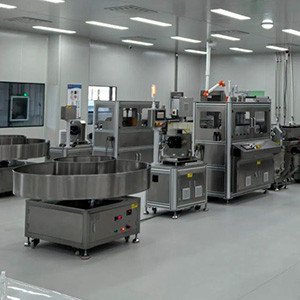
The plant was officially presented to Chelyabinsk Region Governor Alexei Teksler, who personally inspected the production line. In a region already among the leaders in environmental technologies, the new complex links both of the company's sites into a single cycle.
"It's very simple: the more we recycle, the less we bury. Any waste containing plastic takes hundreds of years to break down. In this way we really protect nature and return the product to reuse," the governor said.
The industry's key problem is obvious: Russia produces about 240,000 tonnes of Tetra Pak-type packaging a year, yet only around 40,000 tonnes is recycled. The new plant is designed to narrow this gap.
Key parameters of the new facility:
- design capacity — 900 tonnes of feedstock per month, or 10,800 tonnes per year;
- monthly output — 660 tonnes of paper fibre and at least 190 tonnes of granulated polyal (a plastic-and-aluminium compound);
- production and warehouse area — about 6,500 sq m;
- staff on a nearly fully automated line — about 35 employees;
- production is almost waste-free: closed water circulation and a multi-stage smoke-removal system are in place.
The process begins with shredding the packaging and soaking it in water, after which the multilayer material separates into cardboard and "polyal" — a blend of polyethylene and aluminium. The cellulose is cleaned and sent to a drum thickener, while the polyal is melted, purified and granulated.
The resulting materials are used widely — from cardboard packaging and construction mixes to asphalt concrete and insulation. Moreover, the paper fibre is fully used at the company's own plant, which is among Russia's top five egg-tray producers.
"We are confident that the future lies in deep waste recycling, and the potential of this market is enormous," said Konstantin Zhabotinsky, CEO of PK TsUP.
According to the company, total investment in both Tsentr Upakovki plants over five years reached 1.9 billion rubles. Its first plant, which recycles waste paper and makes eco egg trays, was built for 1.2 billion rubles.
The enterprise has received support from federal and regional Industrial Development Funds and in 2026 joined the federal "Labour Productivity" project under the "Efficient and Competitive Economy" national project. According to the regional environment ministry, previously none of the region's seven sorting complexes selected Tetra Pak from municipal waste because there was nowhere to send it — now this problem is solved.
The company plans to develop the direction further, considering both expanding capacity and building new lines near the existing plant and creating similar facilities in other Russian regions.
Source: Kommersant