September 25, 2025

The launch of the experiment for labeling personal hygiene products has been announced.

Cosmetic

A pilot project for the labeling of personal hygiene products is set to begin. According to a government decree, from September 25, 2025, to August 31, 2026, a voluntary labeling trial will be conducted for manufacturers of toothbrushes and floss, cotton pads and swabs, manicure accessories, and other hygiene items. Over the nearly 12-month period, industry participants will have the opportunity to test the labeling system free of charge and prepare for the transition to mandatory application of Data Matrix codes.

As usual, participation in the experiment is voluntary. During the experiment, participating companies will have the opportunity to test the full cycle of labeling under real production conditions and will receive technical and methodological support, as explained to Rossiyskaya Gazeta by the Center for Development of Telematics (CDT), the operator of the marking system "Chестny Znaк" (Honest Sign).

Which specific products are subject to labeling?


The list is extensive, covering categories of products related to personal hygiene. These include:

  • Toothbrushes and dental floss
  • Cotton products (disks, swabs)
  • Hygienic paper products (tissues, cosmetic wipes, hand towels)
  • Sanitary pads, tampons, and other feminine hygiene products
  • Manicure and pedicure accessories (tweezers, kits, nail files)
  • Combs, hairbrushes, shaving brushes, and other individual-use brushes
  • Sponges, washcloths, pumice stones
  • Massage devices and other mechanotherapy equipment


"The experiment will last almost a year — 11.5 months. This timeframe should be sufficient for market participants to select and implement the necessary technical solutions. It’s worth noting that many large companies already have successful experience working with the labeling system in adjacent categories such as perfumery, cosmetics, and household chemicals. On our part, we are ready to provide comprehensive methodological support and collaborate with the industry to ensure a smooth transition to mandatory labeling. We invite industry representatives to participate in the experiment," commented Varvara Mikhaylova, Head of the Department of Consumer Goods at CDT.

Participation in the experiment will allow manufacturers to pre-test how codes are applied to various types of packaging to fine-tune the technology.

For consumers, based on the experience of labeling in other product categories, it serves as a guarantee of product authenticity. All items can be checked for legality through the mobile app "Честный знак" (Honest Sign).

"Participating in the labeling experiment for hygiene products is a strategic goal for us. Our facility has over 40 production lines dedicated to personal hygiene goods. We plan to use this experimental period to thoroughly test all stages of labeling and select the optimal solution. Although we’ve already implemented labeling for cosmetics and cleaning products, hygiene goods are produced using different technologies, so we need to prepare in advance for implementation," said Maxim Simonov, Quality Director of one of the major manufacturers.


Source: RGRU

Latest posts by email:
To subscribe to the newsletter, first Come in Either Register

Other news

Pharma

In today’s world, effective resource management is becoming an increasingly crucial aspect of successful business operations. This is especially true for industries where equipment plays a key role—such as pharmaceuticals, cosmetology, and the food industry.

02.10.2025
Food

In September 2026, the NOTIS assembly shop in Berdsk is assembling and testing a whole range of new packaging equipment: horizontal flow-pack machines, inclined vertical systems for fragile sweets, a large feed packaging line and machines for ready meals.

02.10.2026
Cosmetic

GSS Cosmetics (Moscow), a contract cosmetics manufacturer, has launched production of exclusive-shaped plastic bottles on its own blow-molding line at the Pushkino complex to GMP standards, making unique packaging formats available to Russian brands without long import chains.

02.10.2026
Pharma

A Russian drugmaker, with the support of integrator IST-PAK, deployed an Italian SIEMPHARMA SRL counting-filling line for packaging tablets and capsules into plastic jars. The project was delivered despite a constrained shop floor and a fixed budget.

02.10.2026
Food

At the Innoprom-2026 exhibition in Yekaterinburg, the Krasnodar region signed agreements to modernize two packaging material plants. Total investment will exceed 900 million rubles, strengthening domestic packaging supply for the region's food industry.

01.10.2026
Cosmetic

SPLAT (SPLAT Global) has launched production of kids' toothpaste in recyclable packaging at its Organic Pharmaceuticals plant in Okulovka, starting the category-wide shift to an eco-friendly tube format.

01.10.2026
Pharma

Farmasyntez Group commissioned a new pharmaceutical enterprise in Ussuriysk (Primorsky Krai). The plant with a design capacity of 12 million medicine packages a year was implemented under the import substitution program Pharma-2030; 90% of manufactured items are on the VED list.

01.10.2026
Food

The Kofemania restaurant brand has put into operation its first in-house food industry production complex in Moscow. The full-cycle factory kitchen on Ryabinovaya Street with a capacity of up to 100 tonnes per day was built under the large-scale investment projects mechanism (MaIP), with investments of 4.45 billion rubles.

30.09.2026
Cosmetic

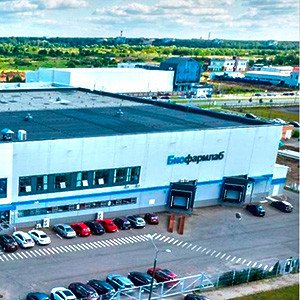
Biofarmlab, a resident of the Dubna SEZ, commissioned the third stage of its cosmetics plant. The new building of 5,600 sq m will allow the company to produce up to 100,000 units per day and 3 million units per month.

30.09.2026
Food

ITMO University presented a laboratory prototype of 'smart' packaging for ready meals at the OpenBio forum: product condition can be assessed visually by a color-changing label — without a smartphone or special devices.

29.09.2026
Cosmetic

Austrian packaging maker ALPLA expanded its portfolio for personal care and pharma with a new monomaterial foam dispenser featuring a twistlock. The system is made entirely of polypropylene, contains no metal and is fully recyclable.

29.09.2026
Pharma

Argumentum Pharma is completing the equipping of its new pharmaceutical plant in Moscow region's Dubna SEZ: high-tech automated filling and packaging lines have already been installed. Total investment in the project is estimated at 2.5 billion rubles, with commissioning planned before the end of 2026.

29.09.2026