May 20, 2025

China has updated its food product standards, which will come into effect in September.

Cosmetic

The National Commission of the People's Republic of China has published 50 new national food product standards and 9 amendments to existing regulations. The documents were developed jointly with the National Health Commission and the State Administration for Market Regulation of the PRC, and will come into effect on September 19, 2025, reports the Russian Export Center (VEB.RF Group).

"These changes are aimed at improving the quality and safety of food products in the Chinese market," states the report.

Key changes in the new standards include:

  • Updated labeling rules for pre-packaged foods;
  • Revised requirements for materials that come into contact with food products;
  • New standards for infant nutrition, including complementary foods and specialized formulas;
  • Revisions to regulations on a number of food additives;
  • Established hygiene standards and methods for product analysis, including microbiological criteria.

Amendments to existing standards cover:

  • Permissible levels of contaminants;
  • Requirements for raw and sterilized milk (including, as previously reported by some media outlets, a ban on the use of reconstituted milk in sterilized milk);
  • Specifications for fruit jelly;
  • The food additive "nitrous oxide";
  • Methods for determining mycotoxins and other non-microbial substances in food products.


For businesses, the new standards mean the need to adapt production processes and update packaging and labeling documentation. According to the Analytical Center of the Russian Export Center (REC), companies operating in or planning to export to the Chinese market should begin preparing for product certification under the new requirements now to avoid delays and penalties upon import. The emphasis is placed on strict control of raw materials and improving product quality, which aligns with the People's Republic of China’s state policy aimed at enhancing food safety.

"We note that China’s share in Russian exports has nearly doubled over the past five years. In particular, in 2024, Russian exporters increased shipments of crustaceans (+16%) and wheat (by 2.2 times), with a significant growth also observed in pork exports," said the REC.

The full list of standards and amendments is available on the portal "Navigator of Market Barriers and Requirements." Additional information on foreign countries’ requirements for Russian exports can be found on the free platform "Barriers and Market Requirements" provided by the Russian Export Center.


Source: © DairyNews.ru

Latest posts by email:
To subscribe to the newsletter, first Come in Either Register

Other news

Cosmetic

In today’s world, effective resource management is becoming an increasingly crucial aspect of successful business operations. This is especially true for industries where equipment plays a key role—such as pharmaceuticals, cosmetology, and the food industry.

02.10.2025
Cosmetic

GSS Cosmetics (Moscow), a contract cosmetics manufacturer, has launched production of exclusive-shaped plastic bottles on its own blow-molding line at the Pushkino complex to GMP standards, making unique packaging formats available to Russian brands without long import chains.

02.10.2026
Cosmetic

SPLAT (SPLAT Global) has launched production of kids' toothpaste in recyclable packaging at its Organic Pharmaceuticals plant in Okulovka, starting the category-wide shift to an eco-friendly tube format.

01.10.2026
Cosmetic

Biofarmlab, a resident of the Dubna SEZ, commissioned the third stage of its cosmetics plant. The new building of 5,600 sq m will allow the company to produce up to 100,000 units per day and 3 million units per month.

30.09.2026
Cosmetic

Austrian packaging maker ALPLA expanded its portfolio for personal care and pharma with a new monomaterial foam dispenser featuring a twistlock. The system is made entirely of polypropylene, contains no metal and is fully recyclable.

29.09.2026
Cosmetic

INEOS Olefins & Polymers Europe announced the launch of innovative Recycl-IN rPP1025C hybrid polymer containing 70% recycled material, designed for cosmetics packaging without compromising on quality or performance.

28.09.2026
Cosmetic

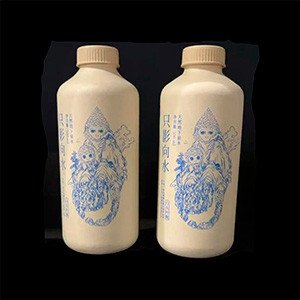
Eco-packaging maker GVPAK (Green Valley Technology) presented at Paris Packaging Week 2026 its Pentawards Bronze-winning 'Zhi Ying Xiang Shui' paper bottle and a new collection of sustainable perfume packaging made from molded fiber.

26.09.2026
Cosmetic

From October 14 to 17, the 33rd International exhibition of the perfume and cosmetics industry InterCHARM 2026 will take place at Crocus Expo. Organizers announced the main premieres: from AI synthesis of cosmetic molecules and biotech ingredients to lyophilized formulas and refillable packaging.

25.09.2026
Cosmetic

"Rinsler Pak" company (part of "Rinsler" / "Terra Plast" Group of Companies) has announced the construction of a new production site for plastic containers for cosmetics and household chemicals at the existing site in Vsevolozhsk, Leningrad region. Investments will amount to about 840 million rubles, the launch is scheduled for July–August 2025.

23.09.2026
Cosmetic

The Korean manufacturer SMCG (Somang Glass) has announced a new line of packaging glass for the cosmetics industry: the share of post-consumer recyclables in the material reaches 60%, and compliance is confirmed by the international GRS certificate. The new product is designed for bottles and cans of skin care products, decorative cosmetics and perfumes.

21.09.2026
Cosmetic

"Arabia", a manufacturer of professional cosmetics from Moscow region, is completing the construction of a new production complex in Protvin. Investments in capacity expansion amounted to 700 million rubles, which will allow the company to increase production by 40%.

18.09.2026
Cosmetic

Kaluga-based polymer packaging manufacturer "Plant Protey" has launched a second production site in Zhukov: investments have exceeded 4 billion rubles, and the capacity of single—stage PET technology has increased by 80% to 800 million vials and cans annually.

17.09.2026